Ask three printers which apparel branding method is best and you will get three sales pitches. The honest answer is that screen printing, heat press and embroidery each win in different situations, and a good printer routes your job to the method that suits it rather than the one they want to sell.
We run all three under one roof in Henderson, so we have no reason to push you toward any particular one. Here is how they actually compare, and how to work out which one your job needs.
The three methods in one minute
Screen printing pushes ink through a fine mesh screen, one screen per colour, directly into the fabric. The result is bold, saturated colour that bonds with the garment and holds up wash after wash. Its economics reward volume: setup happens once, then every extra shirt is quick.
Heat press and DTF transfer print the design first, then fuse it onto the garment with heat and pressure. Colour count is irrelevant, photographic detail reproduces faithfully, and there is no per-colour setup, which makes it the natural home for small runs and personalised items.
Embroidery stitches the design into the fabric with thread. Nothing is printed at all. The finish is raised, textured and effectively permanent, which is why it is the standard for corporate logos on polos, caps and outerwear.
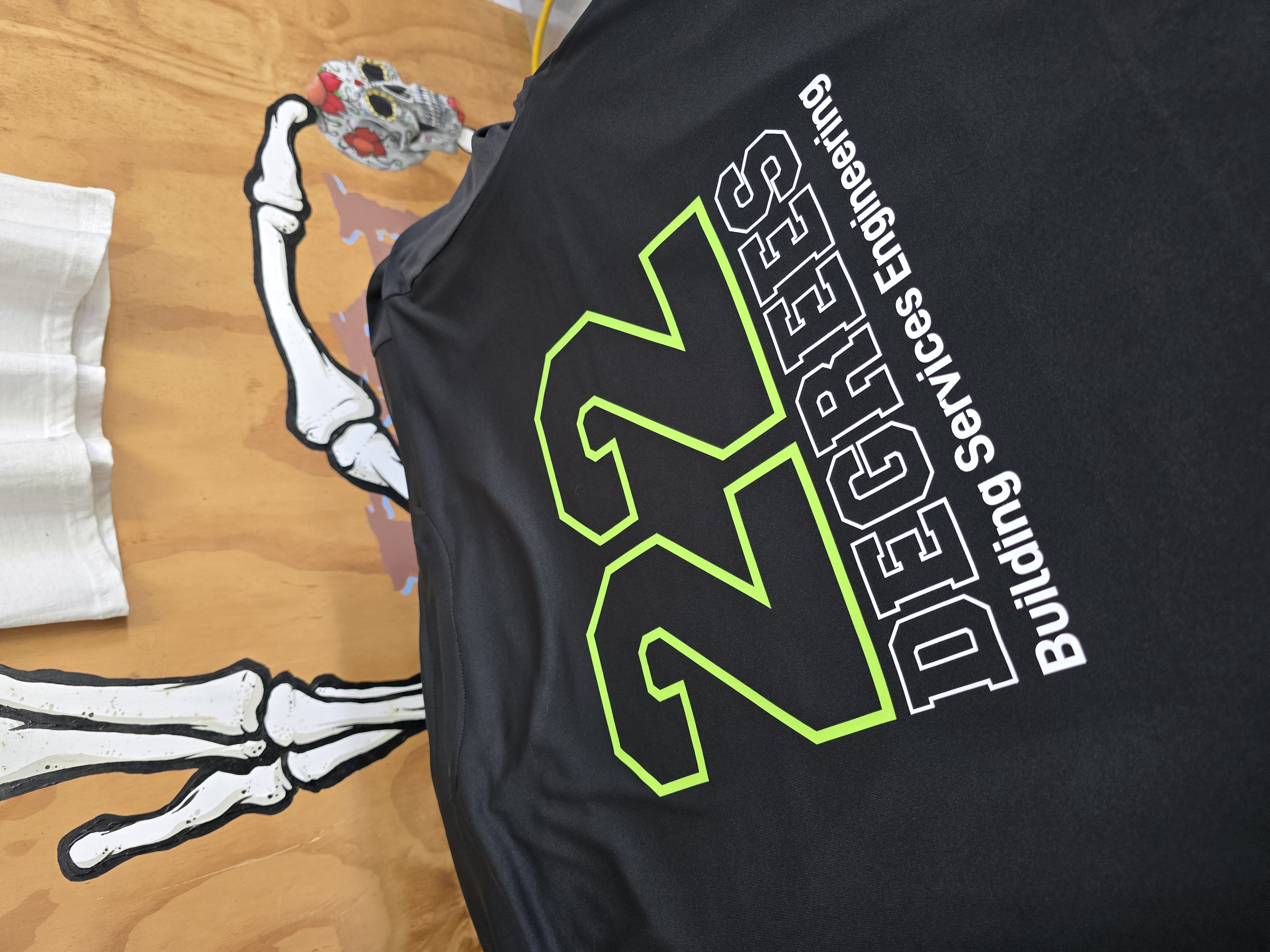
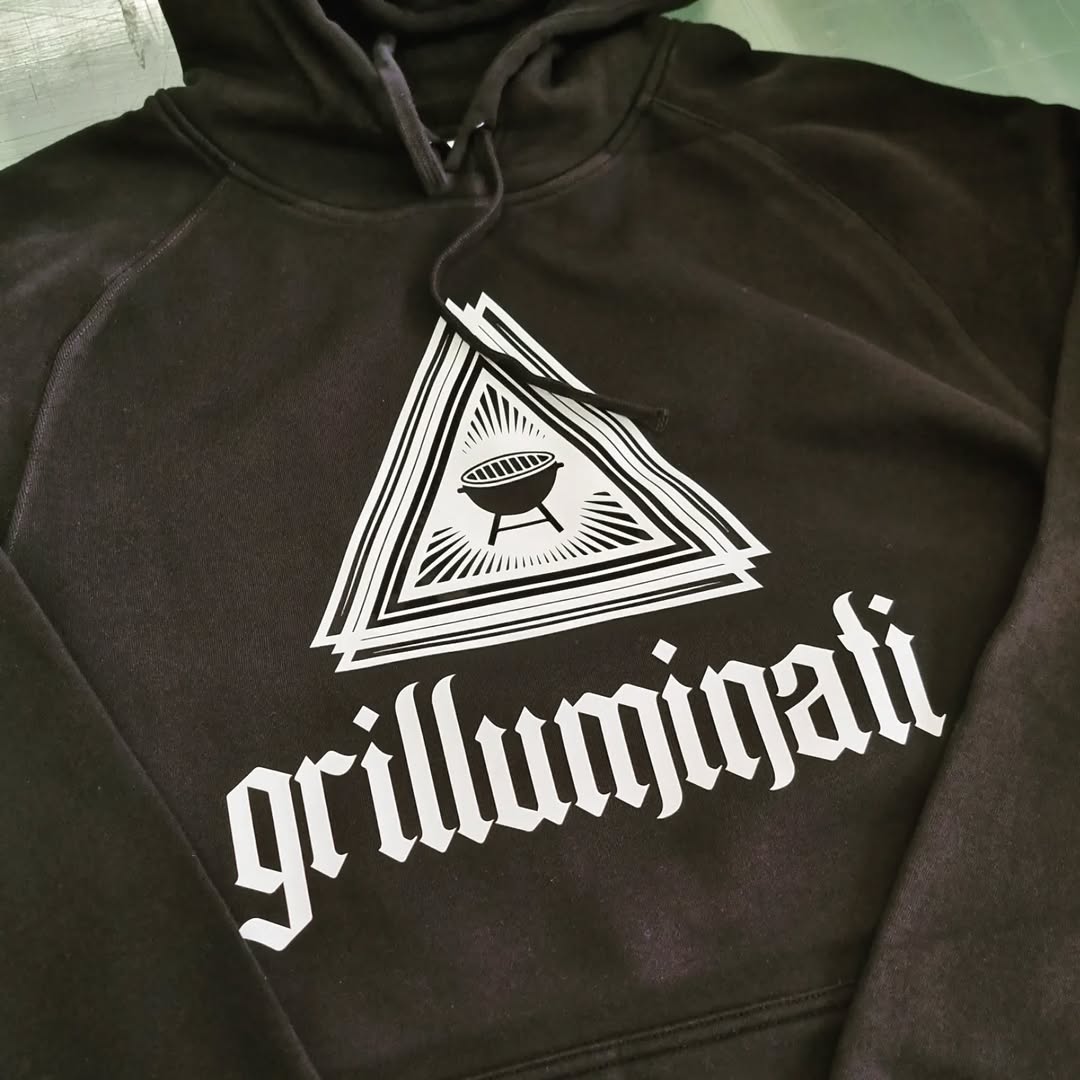
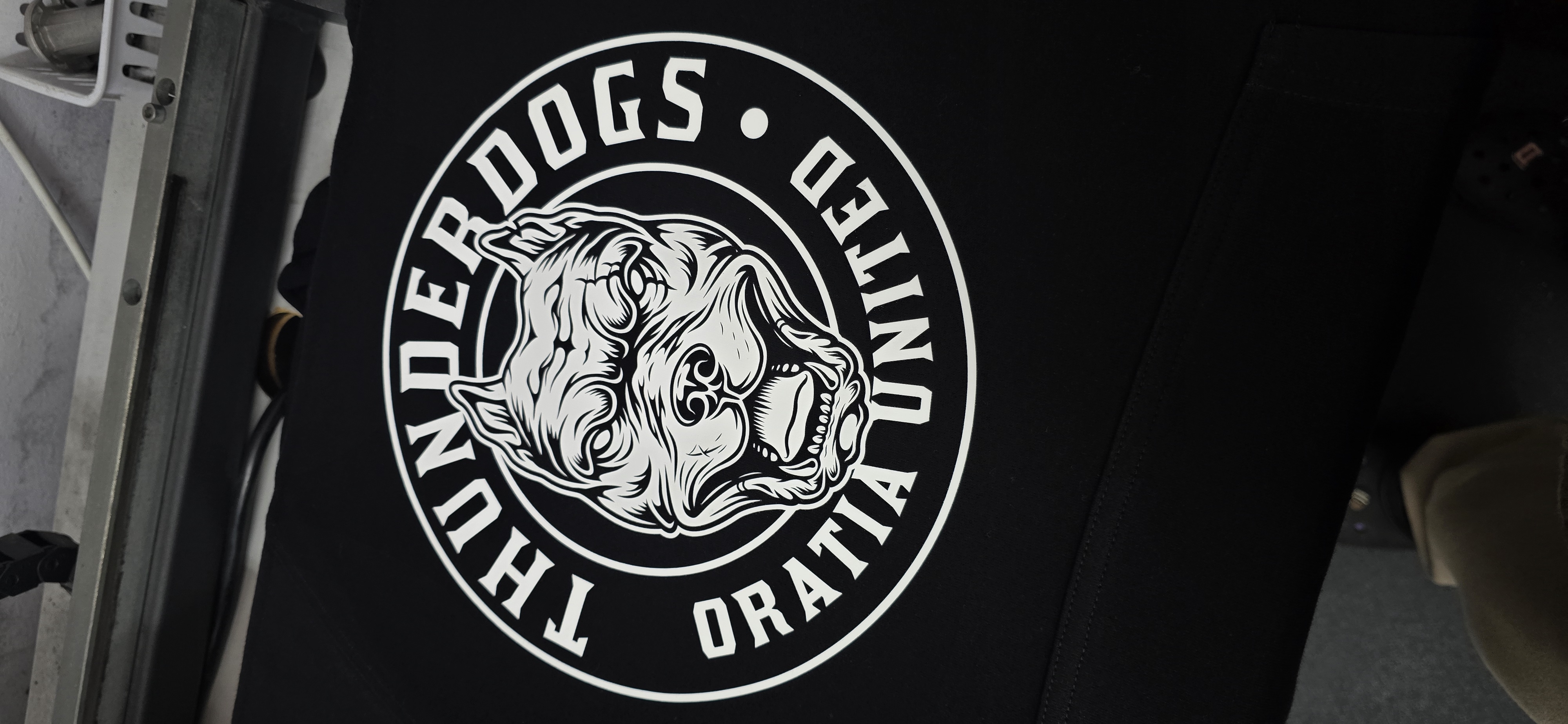
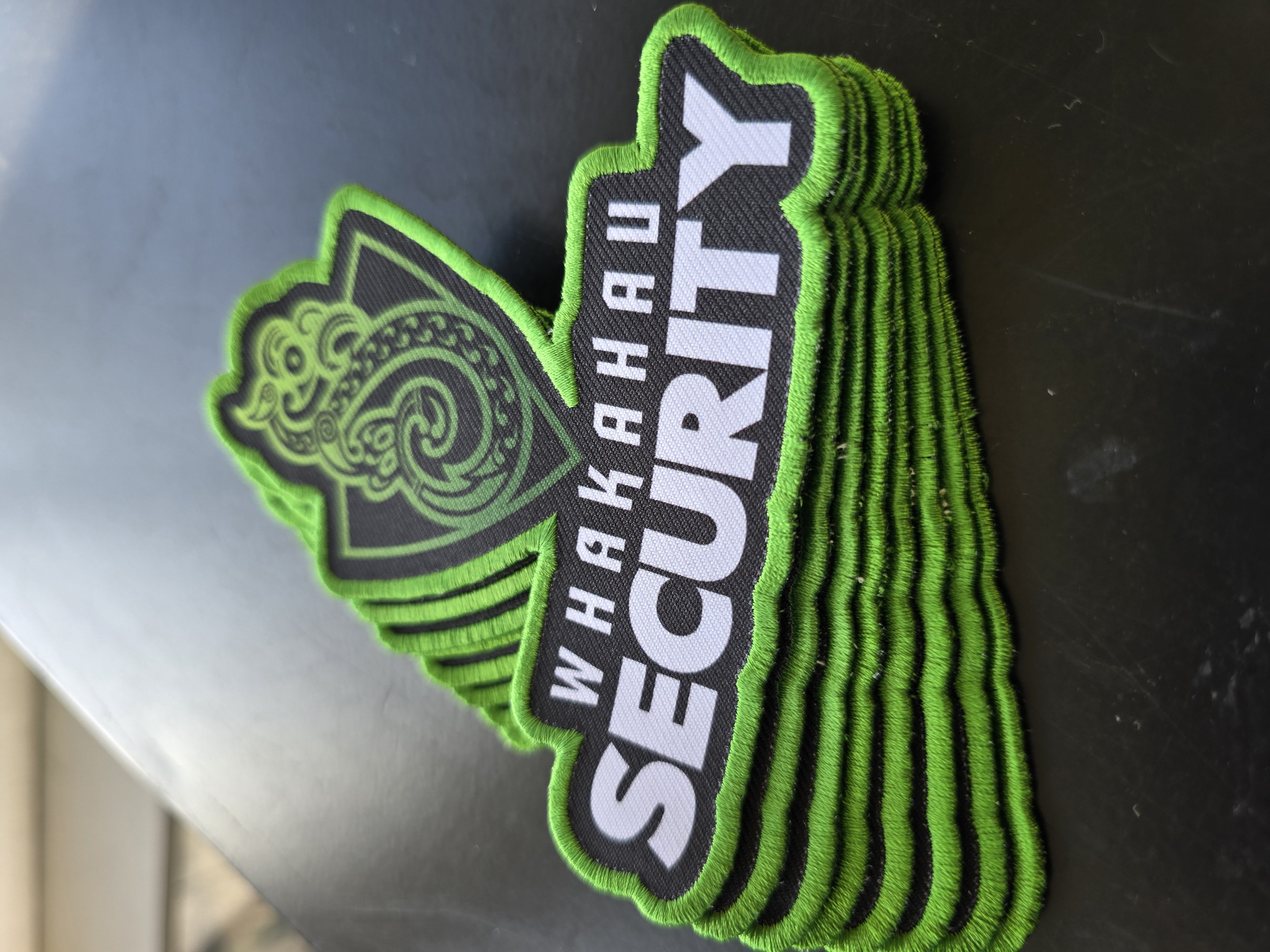
Same logo, three different results. The question is which result your job actually needs.
When screen printing makes sense
Screen printing is the workhorse of custom apparel, and it earns that position in three situations.
Bulk runs. Because each colour needs its own screen made before printing starts, the setup effort is fixed no matter how many shirts follow it. Spread across a big run, that setup fades into insignificance. This is why club merch, event shirts and staff tee rollouts are classic screen printing jobs, and why our bulk order guide leans on it so heavily.
Bold, solid-colour designs. Crests, logos, big typography, flat illustration. Screen printing lays down thick, opaque ink that makes solid colours genuinely pop, including on dark garments, where a white underbase keeps everything vivid.
Gear that gets hammered. The ink bonds into the fibres rather than sitting on the surface, so a properly cured screen print survives constant wearing and washing. Training shirts, hospitality staff tees, anything worn weekly.
Where it struggles: lots of colours, photographic gradients, and very small quantities, where making screens for a handful of shirts makes no sense.
When heat press and DTF make sense
Transfer printing flips screen printing’s logic. There is no per-colour setup at all, so complexity is free and quantity barely matters.
Full-colour and photographic artwork. Detailed illustrations, gradients, photos, designs with a dozen colours. Transfers reproduce them exactly as they appear on the file.
Small runs. Five shirts for a market stall, a dozen crew tees, one-off samples. No screens to make means small quantities stay simple.
Personalisation. Individual names and numbers, where every shirt is different. This is why leavers gear and sports kits almost always involve transfers, often combined with a screen printed or embroidered shared design. Our custom hoodies guide covers how those combinations work on fleece.
Where it struggles: very large runs of a simple design, where screen printing’s economics take over, and heavy-wear gear, where a quality screen print or stitched logo still holds the durability edge over a lower-grade transfer. Transfer quality varies more than any other method, which is exactly why we are picky about the transfers we use.
When embroidery makes sense
Embroidery is not really a printing method at all, and that is its advantage. Thread stitched into fabric reads as quality in a way ink cannot, and it does not fade, crack or peel, because there is nothing on the surface to degrade.
Corporate and staff logos. A stitched left-chest logo on a polo or jacket is the uniform standard across trades, offices and hospitality, because it looks professional on day one and identical on day four hundred.
Structured garments. Polos, caps, beanies, softshells, fleece. Thicker fabrics carry the raised texture beautifully. This is where embroidery beats print almost by default.
Gear that gets industrially washed. Where garments go through commercial laundering, thread simply outlasts ink.
Where it struggles: large designs and fine detail. Every stitch is physical, so a big back graphic becomes heavy and impractical, and tiny text or gradients do not translate to thread. Big artwork belongs to printing; embroidery is a logo specialist.
How to choose: garment, quantity, design, use case
Run your job through four questions and the method usually picks itself.
- What is the garment? Light cotton tees point to printing. Polos, caps and fleece point to embroidery. Performance fabrics need the right transfer or ink, so flag them early.
- How many? Big run of one design: screen printing. Small run or one-offs: transfer. Embroidery scales steadily either way once the logo is digitised.
- What is the design? Solid bold colours: screens. Photographic or many-coloured: transfer. Clean simple logo: thread. If the artwork is still in flux, our guide to choosing the shirt, print position and finish is worth a read first.
- How will it be used? Daily-wear uniforms need maximum durability. Event and promo gear needs maximum impact for one big day. Retail merch needs the finish to feel worth paying for.
And remember the methods combine. An embroidered chest logo with a screen printed back. A screen printed team design with heat-pressed names. Some of the best custom apparel jobs use two methods on one garment, each doing what it does best.
Ask us to route your job
If you have read this far and are still not certain, that is normal. The edge cases are genuinely judgement calls, and they are our judgement calls to make, not yours.
Send us four things: the garment you want (or the use case), your logo or design, the quantity, and the date you need them in hand. We will come back with the method we would use, why, and a quote for your actual job.
We are based in Henderson, West Auckland, and run screen printing, heat press and embroidery in-house for businesses, clubs and schools across Auckland. Get in touch for a recommendation and we will point your job at the right method.