You need custom t-shirts. Maybe it is staff uniforms for a new business. Maybe your club is doing a merch run. Maybe you are organising a corporate event and want something better than a lanyard.
Whatever the reason, the difference between a t-shirt order that works and one that disappoints comes down to what you decide before you place the order. The printing part is our job. The brief is yours.
Here are the five things to sort out first.
Who needs custom t-shirt printing in Auckland
This is written for anyone in Auckland ordering a batch of custom t-shirts. That includes:
- Businesses kitting out staff, running promotions or branding a team
- Sports clubs and teams ordering training shirts, supporter merch or end-of-season gear
- Schools and community groups doing fundraiser tees, leavers shirts or event t-shirts for school events
- Event organisers producing crew shirts, volunteer gear or branded giveaways
- Hospitality teams needing staff t-shirts for front-of-house uniforms
If you are ordering one or two shirts for yourself, the process is simpler. This guide is aimed at group t-shirt printing orders where getting the details right upfront saves you hassle on the back end.
The five things to decide before you ask for a quote
1. How many shirts do you need?
Quantity changes everything. It determines which print method makes sense, what garment options are available and how the job is costed.
A run of 50 staff shirts is a different conversation to a run of 8 birthday tees. Both are doable, but the method, garment and pricing structure shift depending on the number.
If you are ordering for a team, collect sizes before you enquire. A complete size breakdown (not just a headcount) means we can quote accurately and make sure nobody ends up in a shirt that does not fit. Most of the garment ranges we work with cover XS through to 5XL, but availability varies by brand and colour. Sorting sizes early avoids delays once the job is confirmed.
2. What are the shirts for?
This is the question that shapes everything else. A shirt worn once at a Saturday morning event has different requirements to a work shirt that gets washed three times a week.
Staff uniforms and workwear: durability matters most. You want a print method that holds up over hundreds of washes and a garment weight that can take daily wear. If staff are wearing these every shift, the combination of garment quality and print method is what determines whether the shirt still looks good in six months or starts cracking after a few weeks. Screen printing on a mid-to-heavyweight cotton tee is the standard recommendation here. New Zealand’s Consumer Guarantees Act outlines what counts as acceptable quality in products, and that applies to branded apparel too. For something more corporate, embroidered polo shirts are a solid option.
Event and promotional shirts: the print needs to look sharp on the day. These are often lighter-weight shirts where visual impact matters more than longevity. Full-colour graphics, photographic designs and sponsor logos all work well with heat transfer methods because there is no limit on the number of colours.
Sports and club merch: performance fabric, moisture management, and print methods that flex with the garment all come into play. Auckland clubs usually want bold, durable prints that survive training sessions and weekend washes. Screen printing is our go-to for custom t-shirt printing on club orders. For clubs ordering both tees and outerwear, we can match the branding across custom hoodies and tees in the same run.
Fundraiser and school runs: usually a balance of visual quality and practicality. Leavers shirts, for example, need to survive a school year of regular wear. These orders often involve individual names or numbers on the back, which means heat transfer for the personalised elements and screen printing for the shared front design.
Tell us the use case and we will steer you toward the right combination of garment and method.
3. What artwork or logo do you have?
Your artwork determines what is achievable. A clean vector logo opens up every print method. A low-resolution JPEG from a Facebook page limits your options.
Here is what helps us give you the best result:
- Vector files (AI, EPS, SVG, PDF) are ideal. These scale to any size without losing quality.
- High-resolution PNG or TIFF files work for most methods, as long as the resolution is high enough for the print size.
- Low-res images (under 300dpi at print size) may need cleanup or recreation before they are print-ready.
If your artwork is not in great shape, that is fine. Our graphic design team can redraw, clean up or adapt your logo for print. It is better to flag this early than to find out on press day that your artwork does not work at the size you need.
We see this a lot with clubs and community groups who have a logo that was designed for a website header or a social media profile. It looks fine on screen at 200 pixels wide, but when you scale it up to a full-back print it falls apart. A quick redraw into vector format solves that and gives you a file you can reuse for future orders, signage and anything else that needs clean artwork.
4. Where do you want the print?
Print position affects the look, the cost and sometimes the method. Common placements include:
- Left chest: standard for business logos, staff uniforms and corporate apparel
- Full front: bold graphics, event branding, promotional designs
- Full back: team names, sponsor panels, large artwork
- Sleeve: subtle branding, secondary logos
- Multiple positions: front and back, chest and sleeve, or all three
Each position is a separate print setup, so knowing your layout upfront helps us quote accurately. If you are unsure, tell us what you are trying to achieve and we will suggest a layout that works.
Multi-position t-shirt printing is common for Auckland sports clubs and event shirts. A left chest logo on the front, a large graphic or sponsor panel on the back, and sometimes a secondary brand on the sleeve. We set these up so the colours and registration match across all positions, which matters when you are dealing with precise brand colours.
For business uniforms, left chest is the most common. It is clean, professional and works with either screen printing or embroidery depending on the quantity and the look you are after.
5. What print method suits the job?
You do not need to be an expert on print methods, but it helps to understand the basics so you can have a useful conversation with your printer.
Screen printing: ink is pushed through a mesh screen onto the fabric. It produces vibrant, durable prints that bond into the cotton fibres. Best for bold designs with solid colours on larger runs. Each colour requires a separate screen, so simpler designs are more efficient. This is our most popular method for business, sports and event orders. Once the screens are set up, the per-unit cost drops significantly at volume, which is why it suits runs of 15 or more.
Heat transfer: a printed design is transferred onto the shirt using heat and pressure. Works well for full-colour artwork, photographic images and smaller batches where screen printing setup is not practical. Good for personalised names and numbers. We use SupaColour transfers for most of our heat press work because the colour reproduction and wash durability are a step above standard transfers. The New Zealand Intellectual Property Office has useful guidance if you are printing trademarked logos or need to check whether artwork you have been given is cleared for reproduction.
Embroidery: thread stitched directly into the fabric. Premium look and feel, extremely durable. Best for logos on polo shirts, workwear and corporate apparel. The raised, textured finish communicates quality in a way that flat printing does not, which is why it is the standard for corporate uniforms and premium staff gear. Not ideal for large or highly detailed designs because the stitch count drives complexity.
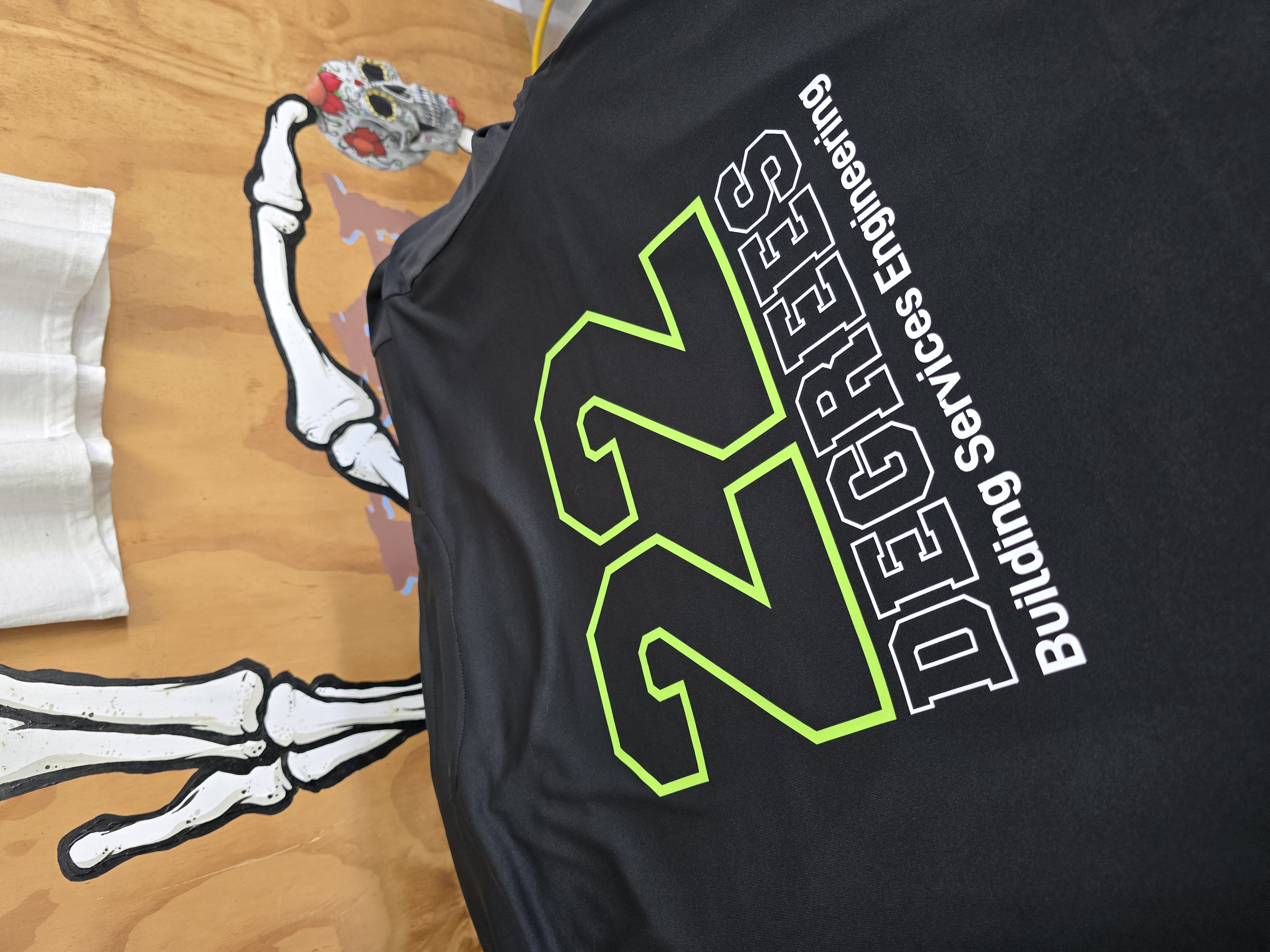
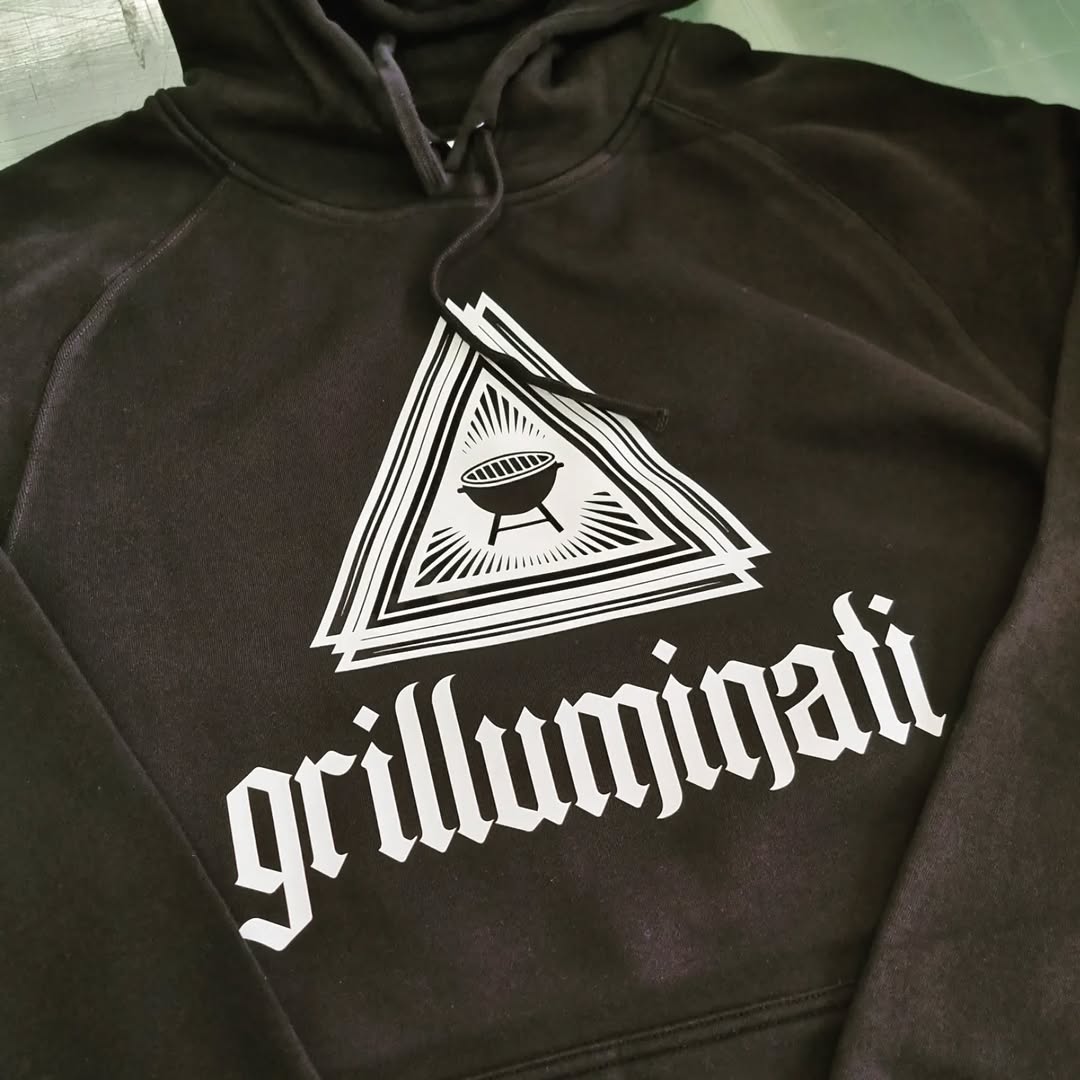
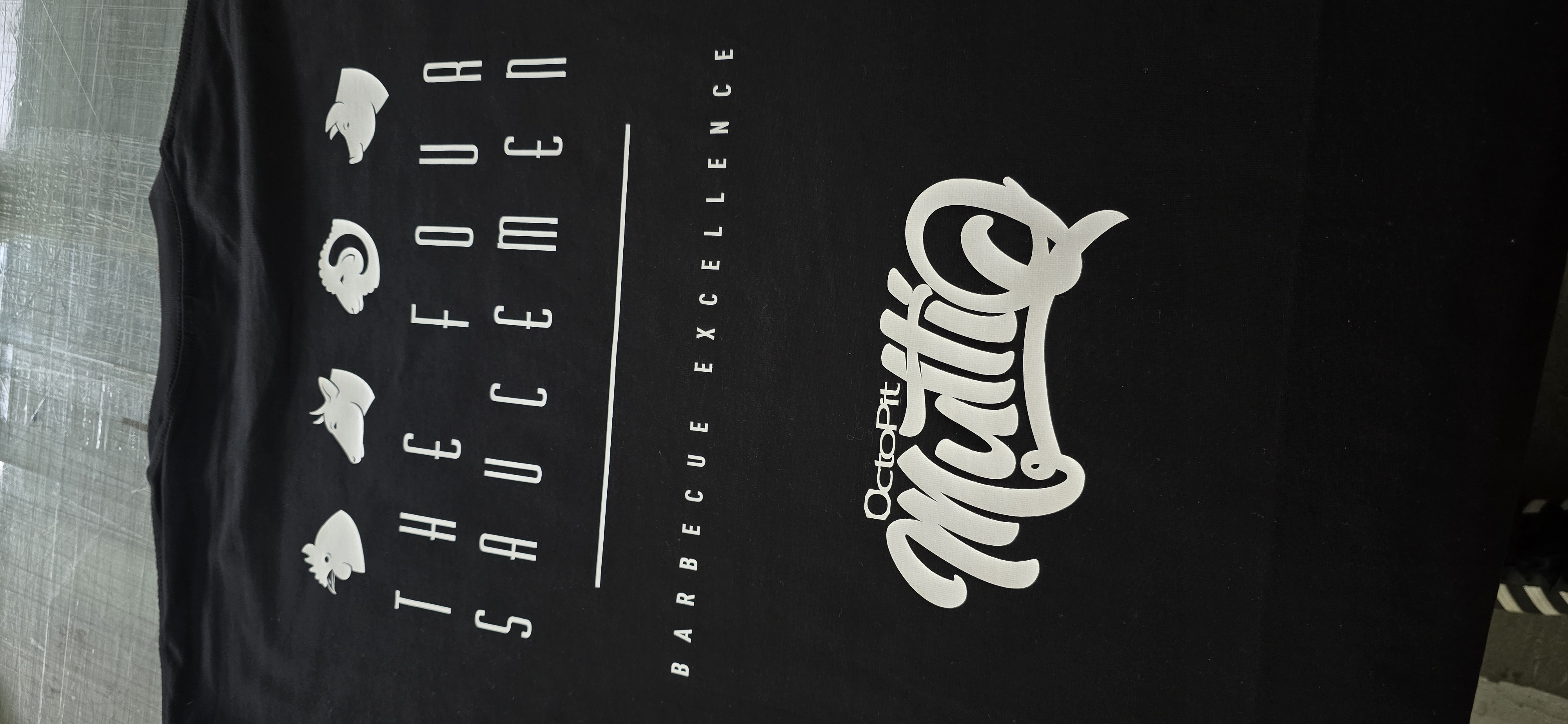
Dark garment printing: printing on black, navy or dark-coloured shirts requires a white underbase layer before the colour ink goes down. This ensures the design stays vivid against the dark fabric rather than getting absorbed. Most hoodie and t-shirt orders involve dark blanks, so this is not an unusual process. It is a standard part of how we handle dark garment runs using either screen printing or transfer methods.
The right method depends on your artwork, your quantity, your garment choice and what the shirts are for. That is why we ask these questions upfront rather than just printing whatever lands on the order form. Custom t-shirt printing is not one-size-fits-all, and the method matters as much as the design.
How the use case changes our recommendation
We see patterns across hundreds of orders every year. Here is how the conversation typically goes:
“We need 40 staff polo shirts with a chest logo” Embroidery. The thread holds up under commercial laundering and gives a clean, professional finish on polo fabric. For ongoing staff programmes, we keep your specs on file so reorders and new-hire additions match the original run exactly.
“Our rugby club wants 100 supporter tees with a big crest on the front” Screen printing. Bold, durable, cost-effective at that volume. Single or two-colour designs keep it efficient. If you are also doing training singlets, warm-up tops or supporter hoodies, we can run the whole lot as a single job.
“We are running a festival and need 25 crew shirts with a detailed full-colour graphic” Heat transfer. Full-colour artwork, smaller run, detailed design. Screen printing would require too many screens for the colour count. The transfer gives you photographic quality on a short run without compromising on durability.
“I need leavers hoodies with individual names on the back” Heat transfer for the names (each one is different), potentially screen printing for the shared design on the front. We combine methods on the same garment when it makes sense. Custom hoodies have specific print considerations around pockets, seams and zippers that we plan for during artwork prep.
“Our cafe needs 10 black t-shirts with a white logo” Dark garment screen printing. White ink on black fabric, small logo, short run. Clean and simple.
“We want branded tees as part of a bigger promotional package” Branded t-shirts alongside caps, tote bags or promotional products. We can match the branding across multiple items so everything looks cohesive when it lands in the hands of your audience.
If your job does not fit neatly into one of those examples, that is normal. Most orders benefit from a quick conversation so we can match the method to the actual requirements rather than guessing.
What to send us for a useful quote
The more detail you include upfront, the more accurate and useful the quote will be. Here is the checklist:
- Quantity and a size breakdown if you have one
- What the shirts are for (staff, event, merch, fundraiser, training, etc.)
- Your artwork (vector preferred, high-res image if not)
- Print positions (chest, back, sleeve, etc.)
- Garment preference if you have one, or tell us the use case and we will recommend
You do not need to have every detail locked in. If you know you need 30 printed tees for a work event but have not decided on colour or placement yet, that is enough to start the conversation.
We are based in Henderson, West Auckland and handle t-shirt printing for businesses, clubs, schools and event organisers across Auckland. Send us the details and we will come back with a recommendation that fits your job, not a generic price list.
Get in touch for a quote or check out our t-shirt printing service page for more on what we offer and how we work.